▸ 原始转写文字稿(8768 字符)
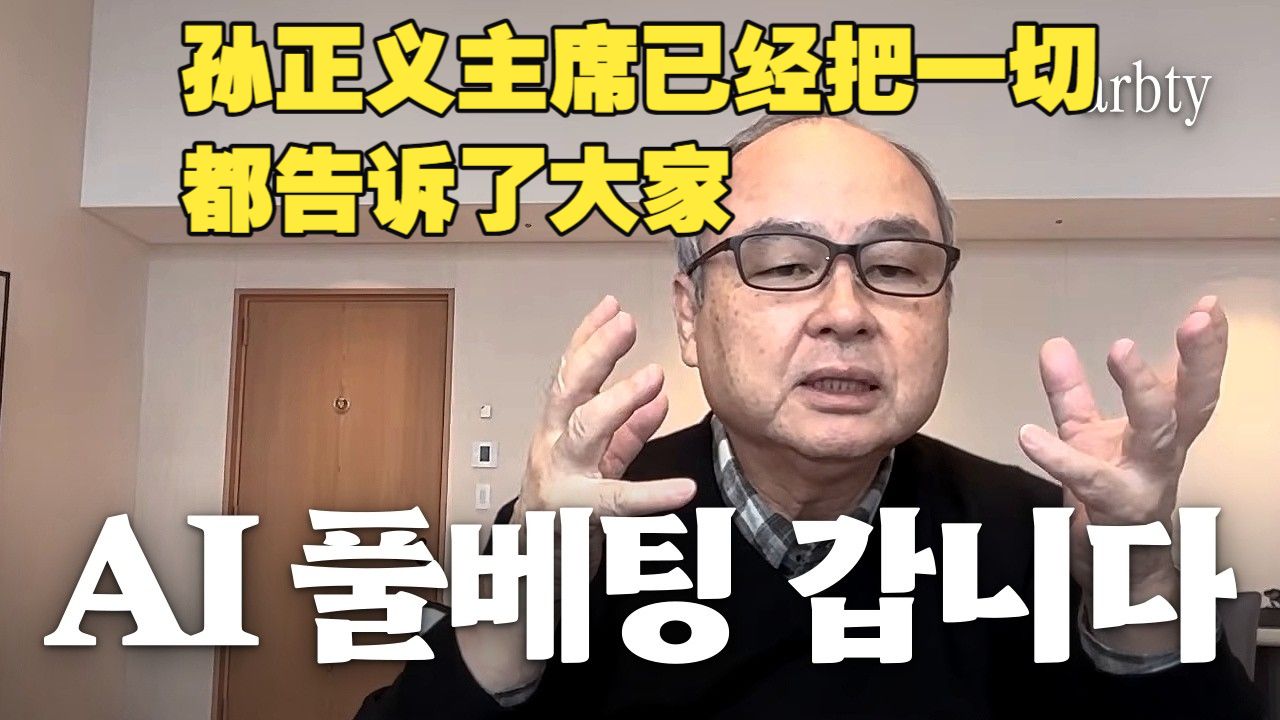
Masa, welcome to Inside Blackstone. We're so thrilled to have you with us. Yes, thank you very much. It's 11pm in New York and you're joining us from Tokyo. You were born in rural Japan to Korean parents. You moved yourself to California at age 16 and then sold your first technology and electronic translator while still a student at UC Berkeley. You used the proceeds to found SoftBank in 1981. Then over the next four decades, you developed a reputation for seeing technology shifts before other people. You backed some of the defining companies of the internet era before making bold bets on the future of artificial intelligence, including massive infrastructure investments and the largest stake in open AI. But the reason I wanted to have you on doesn't have anything to do with your track record. It's because you have been almost unmatched willingness to keep betting on what's next. At 69, you've said that everything you've done up until this moment has been a warm up for what's to come. So I'd love to, I think that's the most astounding statement. So I wanted to start with that. You know, Alibaba, Yahoo, Arm, the Vision Fund. Is this all really just a warm up? Yeah, I truly think so. What's going to happen on AI is so remarkable, so big. Okay. So it seems that everything that I did in the past was just, you know, tiny things. Tiny, tiny things. Well, so when you talk about what's next, Steve Schwarzman, he said to me, you should really just ask Masa one thing, which is sort of, how do you, how do you see it? How do you get conviction around a big idea? AI was my theme for many, many years. In fact, when I saw the first photograph of the microprocessor at the age of 17, you know, I was reading a magazine on the street and I started crying. Truly, physically, I started crying on the street, just reading popular electronics or something. I said, this is going to change the future of mankind. You know, the microprocessor eventually became so powerful, so smart that it will be smarter than people's brain eventually. It may take some number of years, and I predicted maybe 50 years. It's done right. It's now 50 years. I was 17 years old. I'm 69. So, you know, 50 years. Now, the microprocessors, the power of brain in the data centers, these are all happening. And now it's going to go into the brain of the robotics. Okay. So it's not just, you know, on the virtual world, but also in the physical world, it's going to start to happen. You said you think that could be 10,000 times more intelligent than humans, and that could come within a decade. Has that timetable sped up? No matter what, how you define, if the AI becomes 10,000 times smarter, there's no more debate. It becomes so smart that it will start to innovate in new technology by itself, right? So it's really happening. So paint a picture for me then. What does that world look like? You're obviously an optimist, right, about this AI-enabled future. What does it look like for humankind? They will be happier if the human are happier. If the human is happier by curing our unsolvable disease, like cancer and so on, and make sure we have no more accidents on the street, make sure that there are all kinds of disaster, natural disaster coming. They forecast and they give us solutions. So they become like our surrounding of the brain to help us become more productive, help us become happier, you know, enjoy human-like life. What becomes of human progress? So much of life today, and that you and I probably get out of life is achievement and learning new things each day. What does the human experience become? Well, I think it will be even more fun, okay? We don't have to do what we did not want to do. We can have more joy, more entertainment, more sports, more family engagement, more friends. So more human high touch things, right, that we can do. And yet there's been so much news lately about the risks associated with AI. Even OpenAI recently disclosed new incidents where AI systems had falsified data and hid mistakes and essentially acted without permission, much like the hugging face situation. You know, OpenAI itself says it doesn't believe the industry has solved the alignment and monitoring to a sufficient degree to continue reasonably scaling at maximum speed. Do you agree with that? I'm on the side of not really slowing down. Technology development actually is the solution to those kinds of issues. If we are primitive, of course, we need the guidance, the rules, like when the automotive society comes, okay, we create a room that we cannot drink, right? When you are driving, you cannot have alcohol in your brain. You have to stop at the red light, okay? You have to run on one side of the road so that you don't have a crash, okay? You have to create the rules and the manners, the etiquette for the better, you know, society of automotive. We have to do the same thing for the AI, okay? And cyber attack, we suppose not to do. We have to protect the cyber attack by the technology, and we have to protect bad AI agents don't be misbehaved. Like a human supposed not to be misbehaved. We have to teach AI agents, these are the bad things, okay? So it's not just a capable AI agent, we have to create a good AI agent, good in heart, you know, make human happier. That's the goal AI agents supposed to have, okay? So then, you know, it will become smarter, smarter, not to do silly stuff, not to do immoral stuff. Human society to be, you know, respect the other society, other people, other family, right? We have to do the same thing on AI, not slowing down, the progress, make the solution. So we have to go full speed, where's the good intent? So build the good intent into the system while moving at full speed. Yes. So like Blackstone, SoftBank has made major AI infrastructure investments. You've essentially bet the farm in the sense that you're investing across, you know, the LLMs, the chips, the, you know, the data centers, et cetera. Why not pick just one of those areas? No, I wouldn't pick just one, okay? This is the AI era starting, AI generation starting. The history is going to be creative, okay? So I don't have to run one company and be a CEO of one operating company. I can be an investor. I create an ecosystem, ecosystem of group of companies that we invest. We invest, you know, not as a passive investor. We are, you know, more involved with the growth of the company, bringing synergy among our portfolio company. Usually we are largest shareholder of our portfolio company, like 20%, 30%, 80%. Okay. So we have more involvement with each of the CEO, but only focused AI related. You recently said that SoftBank has begun mass producing robots at a physical AI plant with robots producing robots. I'm curious what these robots are being produced to do. Yes. So we are very quietly developing those, our portfolio company, family company. We have more than 30 robotics companies in our portfolio and very quietly preparing the time to come, okay? But as I said in the beginning of the conversation, there's humans still doing a lot of tiring job. Doing dishes like I do. Exactly. Right. We enjoy that, right? So if those things were done by robots, the human can focus doing something more fun, more exciting. I think this story of you at 16 years old, going over to the, you know, really with your own, you know, cleverness, getting in to see the head of McDonald's Japan and asking him one question, which is what should you study? And I'm just curious, uh, what would, what would, if someone asked you today, what to study, what would the answer be? Yeah. AI. AI. Yes. Super intelligence. If you're interested in medicines, okay, the super intelligence for medicine, make it much more productive medicine, okay? Super intelligence for the auto. So if you're interested in medicine, you're interested in medicine, you're interested in medicine, you're interested in medicine, you're interested in medicine, you're interested in medicine, you're interested in medicine, you're interested in medicine, you're interested in medicine, you're interested in medicine, you're interested in medicine, you're interested in medicine, you're interested in medicine, you're interested in medicine, you're interested in medicine, you're interested in medicine, you're interested in medicine, you're interested in medicine, you're interested in medicine, you're interested in medicine, you're interested in medicine, you're interested in medicine, you're interested in medicine, you're interested in medicine, you're interested in medicine, you're interested in medicine, you're interested in medicine, you're interested in medicine, you're interested in medicine, you're interested in medicine, you're interested in medicine,